

 Bodh Gaya is the single most sacred site of Buddhism. It was in the forest here that Prince Siddharta sat under a tree and achieved enlightenment two and a half millennia ago. From here, he went out as the Buddha to teach his Eightfold Path to the masses. The tree was soon enshrined within a stone fence, and the marking of this holy spot later grew to include a stupa, which was overbuilt by larger and larger stupas, a temple, and other markers (such as stone lotuses) noting just about everyplace the Enlightened One had so much as placed his foot during the period of his epiphany. The famous tree is now called the Bodhi tree (Bodhi is Pali for enlightenment; it’s also called a pipal tree, or Ficus religiosa), and the village around it is known as Bodh Gaya.
 The bounteous, sheltering Bodhi tree that stands here today is said to be the 3rd generation descendant of the very tree under which the Buddha sat. A cutting of the original tree was sent to Sri Lanka by Ashoka’s daughter, where it flourished. A few hundred years ago when the original died, a cutting was brought back from Sri Lanka. The area around the tree and its associated Mahabodhi temple is serene; monks and lay Buddhists come here from all over the world to meditate.
 Inside the temple, the wealthy international Buddhist trust that cares for the site has taken great pains to “modernize” the setting. What is actually a dank, cave-like temple cut from black granite, has been painted over in bright colors with thick layers of high gloss paint. Padded linoleum covers the floor, with a small patch cut out for offerings. A chandelier lights the interior and spotlights focus on the Buddha’s statue inside a clear glass enclosure. The ancient statue, carved from the same black stone as the temple, is now immaculately coated with gold. They have even installed air conditioning, so one can feel the blessings of the Buddha immediately upon entering his timeless presence. There is nothing left of the look, feel, or ambiance to suggest that this is an ancient Indian site, as opposed to any ordinary modern temple. This is not entirely a bad thing in a living temple; modern pilgrims can be very comfortable here. But as an archaeological treasure, it has been defaced.
 During the Buddha’s time, this whole place was unbroken forestland a few miles outside the town of Gaya. Today it remains but a small village, dreadfully impoverished, but dotted with the ornamental and sometimes opulent monasteries built by foreign Buddhist governments. Many lavish hotels cater to foreign tourists who remain sequestered in their tour groups. The wealthiest Buddhist country is Japan, which has developed a large compound here, including a free kindergarten for local children (serving about 180 children each year) and a free clinic (seeing some 250 patients a day). I was pleased to see the grounds and facilities for the local poor so perfectly well maintained, though such gloss looked sorely out of place here. The most ostentatious, gold-bedecked monastery was built by the Thai government, though without any obvious benefits for the locals. The Bhutanese and Tibetan governments also maintain very large monasteries here. There’s a Chinese monastery, too, although since it obviously doesn’t get government support, it is small, plain, and run down compared to the others.


 During our four quiet days in Bodh Gaya, we visited the temple area often. It was interesting to watch people, listen to them, and speak to a few. Sitting under the Bodhi tree, I was struck by the degree to which the Buddha’s teachings have morphed and been corrupted over time, reduced to mere religion by human desperation and weakness. We saw a group of Indian pilgrims come through. These were poor villagers, most likely illiterate, dalit or tribal women dressed in their best clothes for the occasion and too shy or beaten down even to raise their eyes or reply to Namit when he genially inquired where they were from. Thousands of people from the dalit community converted to Buddhism in the past 50 years, in a kind of well-intended, if naive, political maneuver that was to help rid them of the shackles of their low-caste status. Apparently, conversion did not help too much. And listening to their guide that day, I had the impression none of them knew much of anything about the Buddha or Buddhism at all. But they had been brought here to be instilled with a sense of religious awe for the Buddha—who was spoken of as a god—and pride in their religion, which none of them seemed too curious about. They bowed their heads, listened to their guide, and paid their respects as they were instructed.
 On the other extreme was an amiable young Indian monk who had taken up meditation at the age of 19 to help him manage his mental life. He said he had learned the true teachings of the Buddha, and had little regard for the religions that had come up around it. He was a sharp guy, also very sweet and soft-spoken, who had studied very carefully under his guru in the Vipasana sect. We spent a good deal of time listening to him articulately explain the fundamentals of Buddhism in scientific language. He also described his own experiences as a practitioner of Buddhism. But as he spoke to us over the course of two days, his account of his experiences became more and more strange. And then he revealed his great secret: that he was a spiritual guide of some great power and consequence in his past lives. He described to us that he heard the voices and saw the spiritual bodies of others all around him all the time, those with whom he had traveled through many previous lives together. They were always inside his head, he told us, constantly. They were always talking to him. In fact, it was they who had told him to reveal to us his secret. The voices had told him that they were using him as a case study: over the course of his many lives, they had packed him full of mental torments, and now they were studying methods of trying to help him. It was an unsettling experience, this encounter. In the end, I felt very sorry for him. (August 2006)
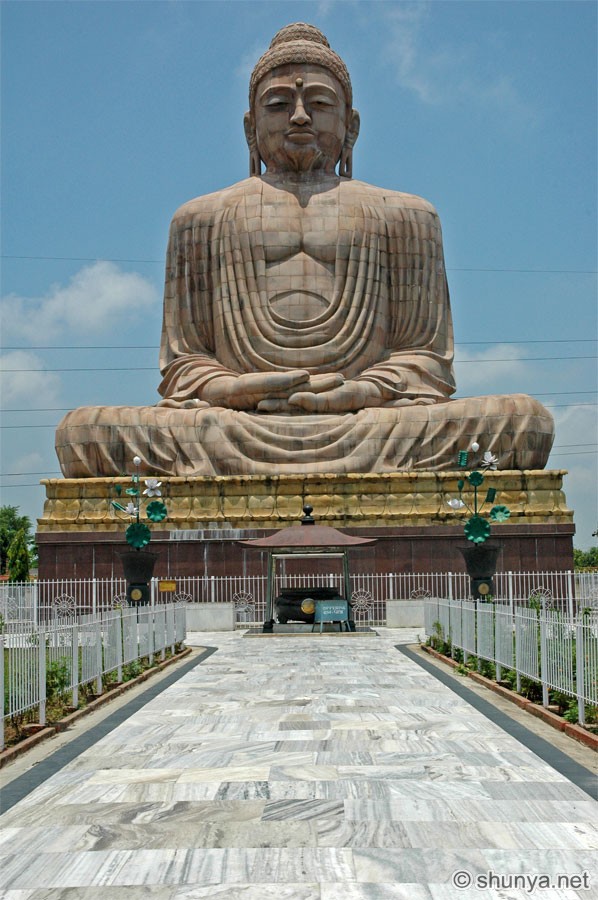
Note: For more pictures of Bodh Gaya, please click here.


Leave a Reply