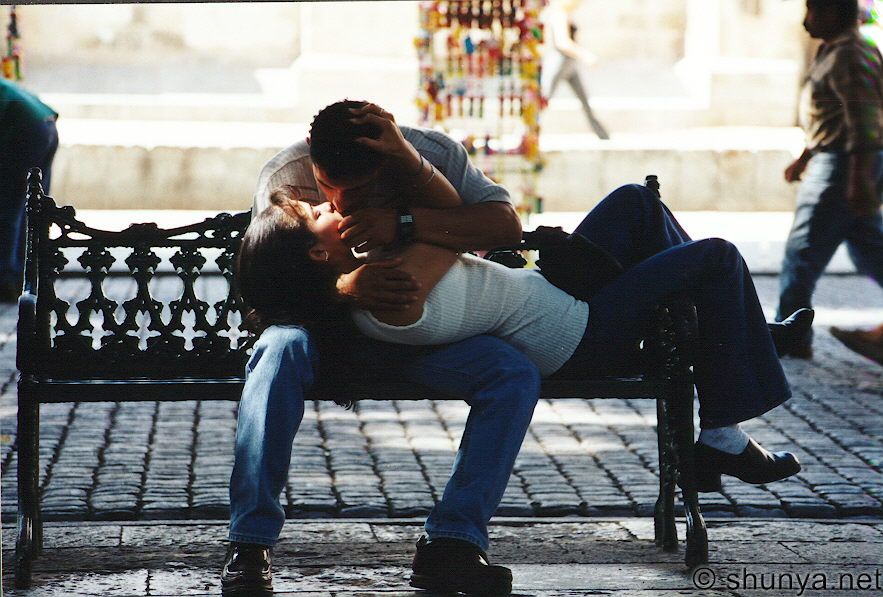
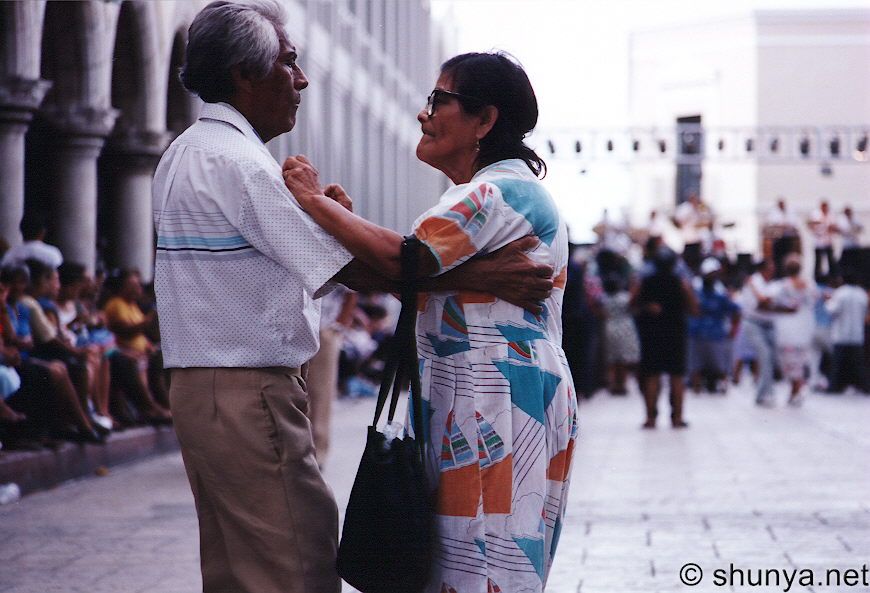
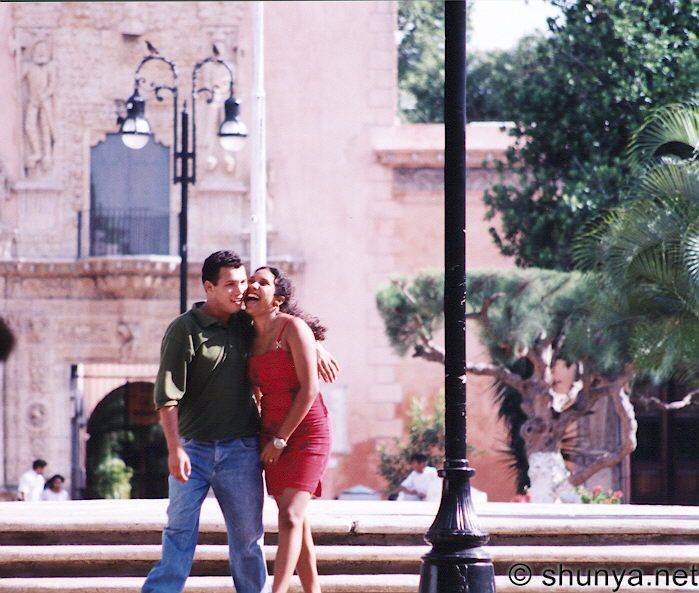
On Shooting People

Shooting with a camera, that is. Most regular readers of this blog are probably aware of my large collection of travel photos on shunya.net. About a month ago, a man from Germany emailed me this note:

May I just politely ask you who gave you permission to post the images of all these people on the web? Have you ever asked them for their consent – some of your pictures really look like they were snapshots or secretly taken – even of people in the most miserable situations.

How can you bear people praising your photographic “skills” – when you just took from poor people what others would never yield: their very sphere of privacy and personality.

I am sure you want to do only good by exposing the world to what is going on in disadvantaged places. It might however be worth reconsidering if you are not mostly just benefiting yourself.

This is how I replied to him (with minor edits):

Bathingpilgrims15You raise some interesting points. First,
let me just say that I photograph people mainly to please myself.
I would do it even without the web. It is my attempt to remember sights and faces that made a mark
on me. Travelers have long used words and sketches to record their observations. I am
adding the element of photography to it. My photos, then, are a modern aid
to my memory. Nothing objectionable so far, right?

But what can justify my posting them on the web? There are two kinds of objections to consider here: legal
and moral, both of which are more relevant where consent of
the subject is not taken.

People59
On the legal front, nearly all of my people
pictures are in public places:
markets, fairs, river banks, bus/train stations, temple
precincts, festival sites, town squares, streets, parks, etc. What does
privacy mean in such public spaces? Google now has street view, so does Microsoft. Documentary filmmakers have long done it, as have
photojournalists, reporters, and videographers (esp. with celebrities). What gives a photographer the right
to shoot horrifying images of suffering in a war zone or a drought hit
area? What laws help us decide, or grant permission?

StreetsleeperOn the moral front, the question to ask is: am I causing my photographic subjects any harm? In general, my impoverished subjects are
not easily traceable or identified in any way. Most of them don’t know
or care about the web, nor do others in their circle. The probability of
harm coming to them due to their photos being on a website is so small
that it’s pointless worrying about it. In my mind, just the wider educational benefits of posting such photos on the web outweigh the downsides.

You make an odd argument—that
photos take away from poor people their sphere of personality. I
disagree. This is a sentimental idea without merit. Photos do not
destroy personality,
not of the poor, nor of the rich. I won’t
hesitate taking people photos even at Oktoberfest or a Gay-Lesbian parade in San Francisco. Photos of the poor are represented in my work to the extent
they are part of the world. And they are arguably revealed in a fuller range,
from joyful to ordinary to miserable states.

Haridwar68
Praise for my “skills” is irrelevant to this discussion, as is the point that I donate, or negotiate on-the-spot payments to those whose photos I take, when applicable. But this has nothing to do with your main concern.

What do you think?

This exchange happened a month ago; he hasn’t replied so far. (See here and here for related thoughts from previous posts.)

Category:

14 responses to “On Shooting People”

  1. I wonder if the gentleman from Germany harbors some archaic views about the ‘graven image’ of a person containing/taking away some essence of the person. That might account for his “How can you bear people praising your photographic “skills” – when you just took from poor people what others would never yield: their very sphere of privacy and personality.” It’s almost as if he’s accusing you of lessening the person whom you photographed in some way.
    I’m fond of photographing the flowers in my garden, and do so with enthusiasm every year. I make them into greeting cards, screensavers, email them and what not. Ergo, I am exploiting these plants for their beauty.
    What a ridiculous argument! I think that it’s just a case of sour grapes and no true concern for the ‘welfare’ and ‘privacy’ of those people who were photographed.

  2. Many years ago, I had felt that notions of the “sphere of privacy” or “personal space” were typically Western constructs, resulting from having too few people and too much land.
    Today, I am willing to grant that photography can be intrusive, but if you seek permission from someone before you photograph him or her, I don’t see much of a problem.
    However, I do see an issue, with at least one of the photographs accompanying this post that I had not seen before: would the woman with bare breasts in the bathing ghats picture object to having the photograph taken and/or displayed publicly ? If so, then I think it behooves you to take down the picture.
    By the way, I think the picture is quite aesthetic. I recall seeing a very similar picture many years ago, published in the magazine India Today, probably taken by Raghu Rai. It was a beautiful black and white picture, the shot having beentaken from above. The visual effect was quite captivating. Nevertheless, I had felt uncomfortable at the intrusion of the photographer.

  3. I chose that photo on purpose. Opting out is always honored on shunya.net — if the person photographed objects, the photo comes down. The more interesting question is: Given the lack of any feedback here, do you see a problem in putting this picture up on the web? If so, why?

  4. Assuming that this photograph was taken without the woman’s permission, I do see a problem putting this picture up because the consent was assumed, not expressly obtained.
    Given social norms in India, I think it highly unlikely that the woman would approve of the picture taking or public display of the picture. However, it is also possible that she might not care that much – she does seem fairly casual about being half-naked in what looks like a public and open place.
    Nevertheless, this idea that consent is automatic unless someone opts out has always seemed extraordinarily presumptuous to me. It is very much along the lines of telemarketing policy in the US.
    Not that I am trying to compare you to telemarketers in any way 😉

  5. I mentioned opt-out since you said, “If [the woman objects], it behooves you to take down the picture.” Of course it does. I don’t like the opt-out business in the US either. The difference here is that telemarketers bother you; this image doesn’t bother her. She will likely never even know about it. So I return to the question: Is it then okay to post it on the web?
    I can understand if one decides to be against all people photos taken without permission, but I don’t hear you saying that. Curious why female nudity was your trigger for this permission seeking business (like poverty for the German guy). 🙂 Someone fully clothed may also object. Btw, as you noticed, many rural/tribal women in India have an entirely different relationship to their bodies than middle-class women. If this photo busts (no pun 🙂 some stereotypes of “the Indian woman”, would it not have served a purpose? Especially if the subject is blithely unaware.

  6. I guess I didn’t say it clearly enough then.
    In the absence of absolute knowledge, my reasoning is based on the likelihood of each circumstance. The likelihood that fully-clothed people don’t mind their photographs being taken and/or displayed publicly is high. On the other hand, the likelihood that people getting dressed don’t want photographs of their semi-nudity being taken and displayed is high.
    Of course, these likelihoods don’t mean anything in case you actually ask the person in question. Given that you did not, the presumption should be in favor of the high likelihood.
    Finally, this moral high ground claptrap of liberating women from stereotypes and inhibitions sounds sophomoric. Not to mention “dorky”. [ Remember ? That favorite word of yours from a few weeks ago comes back to haunt you 🙂 ]

  7. Hey, I said nothing about liberating women (don’t you ever accuse me of that!). I only talked about busting stereotypes as an end in itself. 🙂
    Ok, for shooting without consent in public places, you can rely on the probability of “potential objection by the subject” to being photographed. I’ll rely on the probability of “potential harm to the subject” from my photographs.

  8. The photos don’t bother me at all. But the namelessness of the people you have photographed does. What are their stories? I think that’s what the man from Germany meant.
    I have the same feeling everytime I see early photos of Native Americans. The photographed are simply mannequins but not much more.

  9. The idea that the subject of a photograph is somehow victimized by it, rendered “nameless,” bereft of story, or bereft of dignity must be in the eye of the observer. The act of taking such a photograph may well be neutral.
    Why is it that this indignity befalls only the poor who get photographed? If the fact of photographing subjects makes them “simply mannequins,” why would this not be true equally for all subjects of photographs? Why single out the poor, the publicly naked, or any special category?
    Of course, a photographer may take a picture of an individual in a humiliating position, with the intention of compromising the subject’s dignity–and of course, we would never be in perfect agreement about when we are viewing such a photograph. But to imagine that a state of poverty, in and of itself, is a humiliation, an indignity to have to witness… hmmm, to me that sounds more like baggage on the part of the viewer.
    If we cast our own social mores on a woman from a different sociocultural background who’s quite unselfconsciously naked in public, why not wonder if it’s we, as viewers, who cast an eye of judgment upon her that she shows no signs of casting upon herself? If we see mannequins in archival images of a vanished people, why not ask if it’s we, as beholders, who deny them their stories? (Incidentally, much has been written about the 19th century photographing of Native Americans and its meanings.) In 19th century portraiture of Native Americans, consent would have been given, of course; many of those portraits are posed, dressed-up, studio shots. So it would seem, consent is not the issue.
    But is it the act of photographing the subject that reduces him or her? Or some other reality of their times and circumstances, which we now read into the image? Is it something we imagine to be in the eye of the photographer, himself? Or perhaps our own lack of sensibility about who the subject is, or our own reluctance to grant full dignity to a poor person, a deformed person, a lonely survivor of a vanishing people? I think it’s worth asking why we don’t see simply a photograph of a person, like any person, an individual like ourselves, just another instance of the varied human condition.

  10. It might be a failure of imagination, if not having a name to a photo’s subjects makes them into mere mannequins.
    I think that it was Kamla who was musing over what she was going to prepare for lunch as she dressed after her dip. You see Pappu glaring at his mom as she rinses out clothes in the water- mad at her because she couldn’t spare him a rupee to buy some colored ices near the entrance to the ghat. Ramu is playing with a colorful dupattu, wrapping it around himself to examine the play of colors…and so on and so forth.
    The namelessness of these real people bothers me less than the pouty poses of named supermodels photoshopped and airbrushed to perfection on the tabloid stands at the supermarket checkout.

  11. I must agree that my imagination is quite limited when it comes to other people’s lives. However, my point is not whether a photograph portrays a rich or a poor person, whether the photographer took the subject’s permission, but whether the photographer should be responsible for providing enough context.
    When I see a photograph of a person, I want to know their background, their name, the place where they grew up (and the year and place of the photograph) so that 100 years later they are not just nameless people. Not many people have the opportunity to preserve their life and history in photographs. I think a photographer has some responsibility in helping their subject get a foothold in history as an individual rather than as part of a group.

  12. Well said Sujatha. 🙂 Namelessness is an odd thing to be bothered about. *
    To add to my previous post, the idea of consent too is fraught with difficulties. A travel photographer doesn’t have the option of a lawyer-drawn contract laying out the precise terms and conditions for using a photo. He can only rely on the quick consent of the subject, often amounting to him requesting with a gesture and the subject nodding with a smile. This is consent, and it is polite to request it when possible. But the subject may have no idea what consent is being sought. Does she also consent to let the photographer email a digital version to his friends, put it in a slideshow to his church (titled “Yet to be Saved”), in a student journal in Oregon, in Newsweek, on a billboard near her home, or on nationwide ads for Hutch cellular service? It’s not clear. This is why major ad agencies require a “model release“, with liability waivers and terms of use.
    So even when “consent” is taken, all I’m left with is a subjective harm/benefit calculus for my decision to put an image on the web. As with all moral calculus, I accept that the risks are not zero (if, say, two lovers who might be meeting secretly on a faraway public square get outed :). But I am yet to learn of a single discouraging incident since shunya.net came into being 7+ years ago.
    ________
    * NB: I didn’t see Biswajit’s second, clarifying comment until after I posted this one.

  13. Photography is truly an art form however many people treat the camera lens / photographers eye as an intrusive item. I have photographed persons and places since the age of twelve and often been a target of being invasive. At public festivals, i have been yelled at ,given a one finger salute and politely asked to not take a photo of them.
    I dont believe the subjects of your photos would admonish you for putting them on the web as they are not being seen in a demeaning way.

  14. I think your photographs are an elightment. I am a keen although amateur photographer. I have travelled India and China. My main subject is people. People and more to the point, their faces tell the story of their environment. Keep up the wonderful work. M Craig

Leave a Reply

Contact us:

Go back

Your message has been sent

Warning
Warning
Warning
Warning.

Discover more from Shunya's Notes

Subscribe now to keep reading and get access to the full archive.

Continue reading